

Communication is at the heart of every successful team. It's the thread that holds everything together, yet it’s so easy to get wrong. We assume that if we’ve said something, others will automatically understand it in the way we intended. But how often does that really happen? A one-sided conversation can lead to misunderstandings, misalignment, and delays.
Communication isn’t just about being heard—it’s about making sure your message is understood. In cross-functional teams, this is even more critical. Different perspectives, backgrounds, and mindsets can complicate even the simplest discussions. A quick conversation turns into a drawn-out misunderstanding, or a message intended to clarify ends up creating confusion. Therefore, it’s important for both to sides successfully get their message across.
Effective communication can transform how teams operate. It can connect people, ideas, and actions in a way that moves everyone forward. Without it, even the most talented teams can struggle to deliver the results they’re capable of. That’s why it’s so important to recognize that communication needs to be continuously evaluated and refined at the individual, team, and organizational levels.
Why Is Communication Challenging
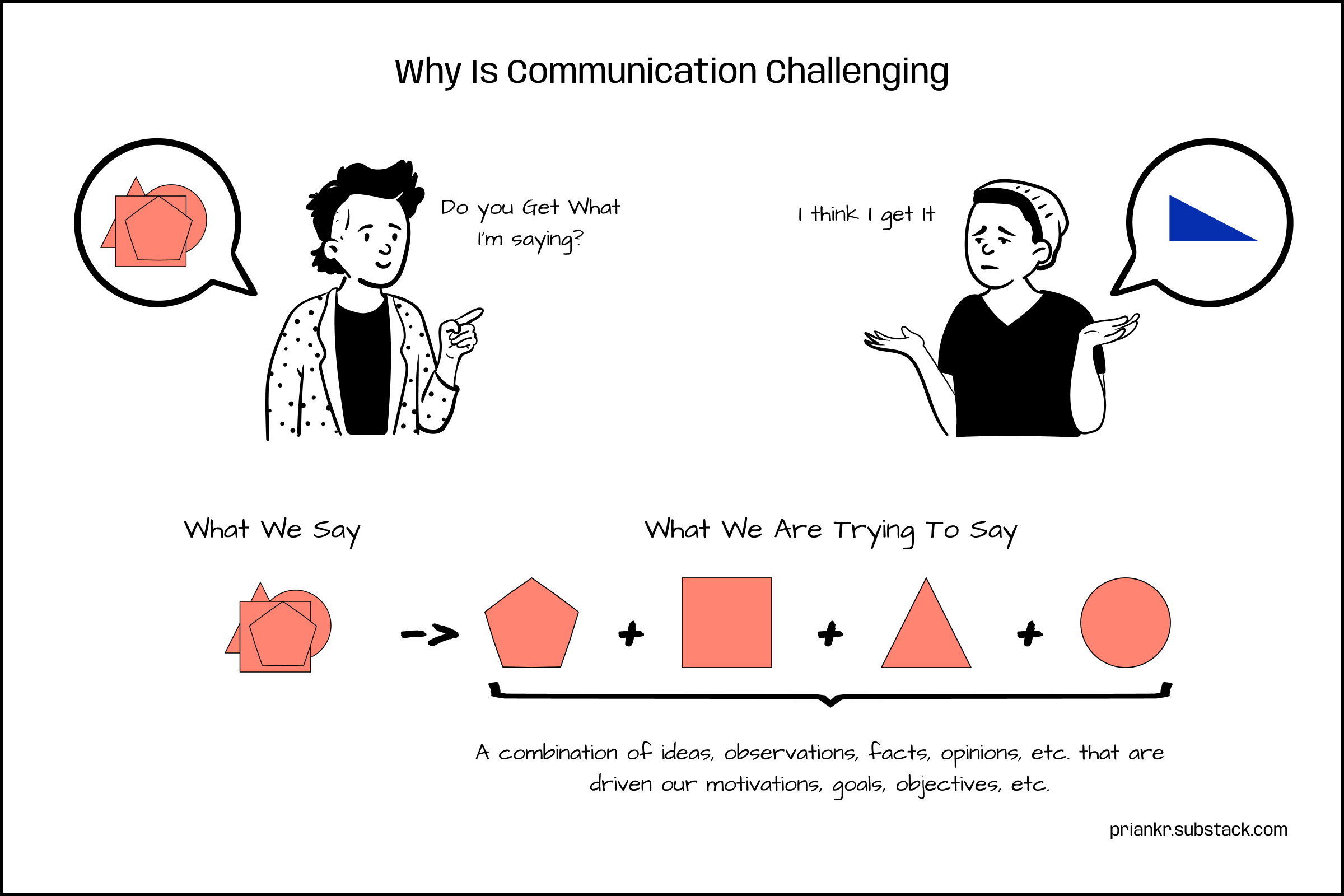
We want our ideas, opinions, and perspectives to be seen, heard, and understood. We feel validated when other people recognize what we’re trying to share with them. But communicating our thoughts is not easy. You never truly know if you got your message across. Or conversely you never really know if you fully understood what someone else said. And this gets in the way of us understanding each other.
Imagine describing a completely new idea to another person—something totally unfamiliar to them. As you describe your idea, they have to piece together a puzzle, draw comparisons with things they know, and fill in the gaps using their imagination. How likely are they to perfectly grasp your idea? Even if they seem to get it, there might be some inherent misunderstandings.
Our thinking is informed by our unique context. There’s a lot behind the words we say (ideas, observations, facts, opinions, etc). Furthermore, our intentions behind those words are driven by our motivations, goals, objectives, etc. However, other people will rarely know or even understand all this. Therefore, they have to use their own context to interpret our words, which can lead them to different conclusions. Good communication is about recognizing and bridging these gaps to create a shared understanding.
Power of Empathy
Empathy helps us understand each other’s perspectives.
Empathy is understanding people from their frame of reference rather than your own. It’s about looking at situations from their perspective and recognizing their feelings, perceptions, and thoughts. It allows us to ask better questions and listen for the right information so, we can figure out “what” needs to be done and “why.” It starts with a genuine curiosity about what’s meaningful to people and what motivates them.
It builds trust within the team.
When you uncover what’s behind the stakeholder requests and frustrations, you build the trust necessary for your team’s efforts to be successful. It can be as simple as asking “why” 5 times or using open-ended questions. Then you need to communicate your understanding, explain what you plan to do, and get their feedback. People are more willing to listen once they’ve been heard. You demonstrate that you understand their reasoning and show your commitment to addressing their concerns. This gives them confidence that you can produce the desired outcomes.
It makes business goals more compelling.
To work effectively, we need to know what needs to be done and why. Often business goals can feel arbitrary, despite how “inspirational” or “aspirational” they sound. You have to uncover what’s driving business goals: What problems is the business/customer facing? Why is this important to them? Why now? When you clarify the connection between your efforts and the business/customer goals, you link tasks to purpose, which makes the work more meaningful. This helps you channel your best efforts, producing the intended outcome.
It helps us leverage the power of storytelling.
We understand people through the stories we create about them. Stories allow us to make sense of information using the power of visuals and imagery. We connect pieces of information to form a picture of what they need and why. Empathy allows us to get closer to the truth. We can get the details of people’s stories by asking questions and listening effectively. When we dig deeper into what they are saying, we can discover how we can help them accomplish their goals.
Key Communication Principles
Listening is just as important as speaking.
Regular feedback is essential for teams to iterate quickly and avoid mistakes, but feedback is only effective if it’s actually heard and understood. This requires active listening, which means fully absorbing the speaker’s message, not just passively hearing their words. When we truly listen, we create an environment where people feel heard and valued. This fosters trust within the team, encouraging more open and honest communication.
Simple and clear language is always more effective.
When explaining something complex, avoid jargon unless necessary, and when you do use it, make sure everyone understands the terms. Teams should focus on clarity, relevance, and timing when communicating, so people do not miss critical information that affects their work. The goal should always be to ensure that the right message reaches the right people at the right time. The clearer we are, the less room there is for misunderstandings.
More communication does not mean better communication.
People often mistake frequent communication for effective communication. We’ve all been in teams where the thinking seems to be that more communication will solve everything. Endless meetings, constant status updates, and messages flooding your inbox. However, information overload leads to people tuning out, missing critical information, or feeling disengaged. The goal should never be simply saying more; it’s about saying what matters. Intentional, concise, and relevant communication is often far more effective (and more appreciated).
Good communication requires well-designed practices and processes.
Effective communication requires intentional systems and processes to create space for people to speak up, share ideas, and innovate. That’s when the magic happens. A developer might suggest a tweak that makes a feature more user-friendly, or a designer might come up with a UI that overcomes a technical constraint. Having well-designed communication practices aligns team members, streamlines decision-making, and keeps everyone focused on what really matters.
Conclusion
Communication is the foundation of everything we do. It helps teams prioritize tasks, understand goals, and resolve conflicts quickly. When we communicate effectively, we reduce friction, minimize mistakes, and create an environment where everyone feels empowered to contribute, leading to better solutions that truly meet people’s needs. isn’t just about talking or sharing updates—it’s about understanding, connecting, and working together better. Effective communication is what turns a good team into a great one.
Thanks For Reading!
If you haven’t already, please consider subscribing and sharing this newsletter with a friend.
I hope you have a great week!